
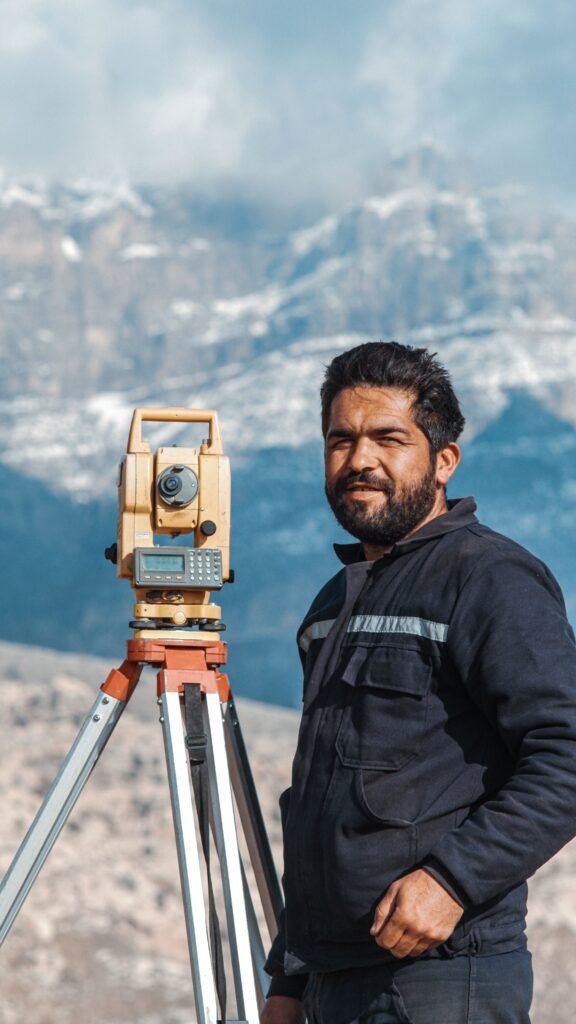
Every building starts below the ground. Geotechnical engineering is the part of construction that studies the soil and rock a structure will sit on, and it decides far more about cost and safety than most people realise. In the Gulf, where ground conditions can change within a single plot, getting it wrong is expensive.
In this article
What geotechnical engineering covers
Geotechnical engineering is the study of how soil, rock, and groundwater behave under load. It sits between geology and structural engineering. A geotechnical engineer answers practical questions: can this ground carry the building, how much will it settle, will the excavation stay stable, and what will groundwater do to it. The work covers foundations, retaining walls, excavations, slopes, and ground improvement. None of it shows in the finished building, which is exactly why it gets undervalued until something moves.
Why Gulf ground conditions demand it
Ground across Qatar and the wider Gulf is not uniform. You find weak surface soils over rock in one place, loose sand in another, and cavities in limestone somewhere else. Sabkha, the salty coastal flat soil common along the shoreline, is a particular headache. It can be weak, it can collapse when it gets wet, and its salts attack concrete and steel. Groundwater is often shallow and aggressive.
A foundation designed for clean rock will not behave the same way on sabkha a few kilometres away. That variability is why a proper site investigation is not optional here. It is the difference between a foundation that performs and one that cracks two years in.
What a site investigation involves
A site investigation gathers the facts a designer needs. It usually starts with boreholes drilled across the plot to bring up soil and rock samples at depth. Field tests measure how dense or stiff the ground is. Samples go to a laboratory to measure strength, how much they will compress, and their chemistry, including the salts and sulfates that matter so much in this region.
On larger or more sensitive sites, geophysical surveys or trial pits add detail. The output is a factual report plus a geotechnical interpretation that tells the structural engineer what the ground can take. Our site investigation services are built to give designers numbers they can rely on rather than assumptions. Shrinking this step to save a little time at the start is the classic false economy.
The ground should shape the design, not the other way round. Bring the investigation in after piling is priced and you have already lost your best options.
How the findings shape a foundation
The investigation drives the foundation choice. If competent rock is near the surface, shallow pad or strip footings may be enough, which is cheaper and faster. If the good ground is deep under weak soil, the design moves to piles that carry load down to it. Where soils are loose but not too deep, ground improvement such as compaction or stone columns can sometimes avoid piling altogether.
The report also sets how deep to dig, how to support the sides of an excavation, and what to do about groundwater. Each of those decisions has a real cost, and each one rests on the survey and ground data behind it.
When to bring a geotechnical team in
Early. The most useful time for a geotechnical engineer is before the foundation concept is fixed, because the ground should shape the design. Bringing one in after the first signs of settlement limits the options and raises the cost. For anything beyond a small single storey build in the Gulf, a site investigation pays for itself by removing the biggest unknown on the project.
If you are planning a project in Qatar and want to know what is under your site before you commit, talk to our geotechnical and survey team about a site investigation.