 +974 7724 0272
 +966 50 204 4383
 +971 56 802 0406
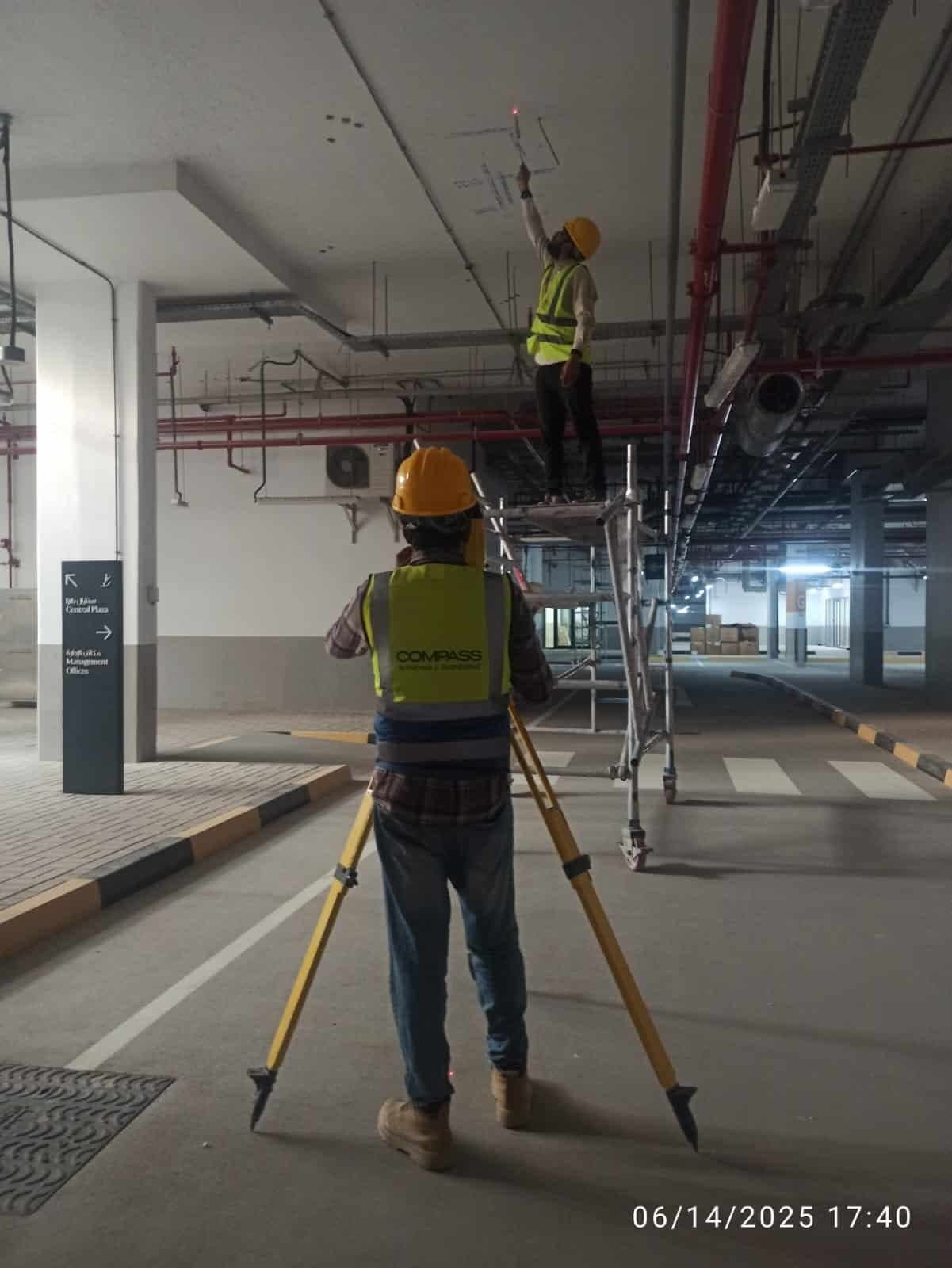
A few years ago, 3D laser scanning was something contractors in the GCC asked about for unusual cases: a heritage building, a complex retrofit, a site with no reliable drawings. That has changed. Building Information Modelling is now the default way large projects in Qatar, Saudi Arabia, and the UAE get designed, coordinated, and handed over, and laser scanning has gone from a specialty service to a standard step early in the timeline.
Why more project teams ask for it first
On a typical GCC construction or fit-out project, several contractors end up working from drawings that do not quite match what is actually on site. Renovation and retrofit work is the clearest example, because original drawings rarely match a structure that has been standing for twenty years. New builds run into a version of the same problem, just earlier, as design changes happen mid-construction and the model has to keep up. 3D laser scanning solves this by capturing the real condition of a site, including walls, slabs, columns, ceilings, and existing MEP routing, as a dense, measurable point cloud accurate to within a few millimetres. That point cloud becomes the foundation for whatever comes next: a renovation design, a clash-detection exercise, or a verified as-built record for the client.
From point cloud to scan-to-BIM
Capturing the scan is only the first step. The real value comes from scan-to-BIM, where the raw point cloud is turned into a structured model whose walls, slabs, MEP elements, and facades are distinct, data-rich objects rather than shapes on a screen. The model can be delivered at different levels of detail depending on what the project needs. A simplified massing model works for early planning, while highly detailed models are used for fabrication and precise coordination across architectural, mechanical, electrical, fire protection, and structural elements. There is little point paying for the highest precision on a model that only exists for space planning. Pairing the scan with our BIM services is where most of that value is realised.
Where it pays off most
Three situations tend to produce the clearest return. Renovation and fit-out work benefits most obviously, because the design team works from verified existing conditions instead of guesswork, which heads off expensive surprises on site. MEP coordination is the second case, since catching a clash between new ductwork, piping, and structure inside the model costs almost nothing compared with fixing it after it is built. The third is as-built documentation, and it matters more than people expect. Owners increasingly want an accurate digital record of a facility for future maintenance, expansion, or resale, and institutional and government clients across the region are starting to ask for it as standard.
The scan itself is the cheap part. What it prevents, the rework, delays, and disputes, is where the real cost would have been.
Field conditions the spec sheet ignores
Laser scanning equipment is rated under controlled conditions, and GCC job sites are anything but controlled. High ambient heat affects both the equipment and the crew, which is why most scanning work in this region happens early in the morning. Dust is the other constant, and airborne dust on an active site will introduce noise into the scan data if the capture plan does not account for it. A live site never holds still either, so scanning has to work around moving equipment, ongoing trades, and access restrictions that a quiet, empty building does not have. Experienced crews schedule capture windows around site activity and leave room for data cleanup before the scan-to-BIM conversion starts. That planning, more than the hardware, decides whether a scan is usable on the first pass.
What to look for in a surveying partner
Not every provider delivers the same quality of model, and the differences show up later, not at handover. A few direct questions are worth asking before signing anything. What scanning hardware and registration accuracy do they actually work to? Do they model in-house, or outsource the scan-to-BIM conversion to someone else? Can they deliver in the software your design team already uses, such as Revit or Navisworks? And have they worked at a similar scale in this market, where heat, dust, and a live job site create problems a lab-condition case study never mentions? A provider that answers plainly, and can show finished models rather than marketing renders, is usually the safer bet. Ask how they handle revisions too, because design changes after the initial scan happen on almost every project, and a clear process for re-capturing specific zones saves real time and budget.
3D laser scanning and scan-to-BIM are not replacing traditional surveying. They extend what a survey can deliver, at a level of detail and speed paper methods never matched. For teams working on renovation, MEP-heavy builds, or anything where accurate as-built data matters, this has stopped being the exception and become the default. Compass Arabia provides 3D laser scanning, scan-to-BIM, and digital mapping across Qatar, Saudi Arabia, and the UAE.