
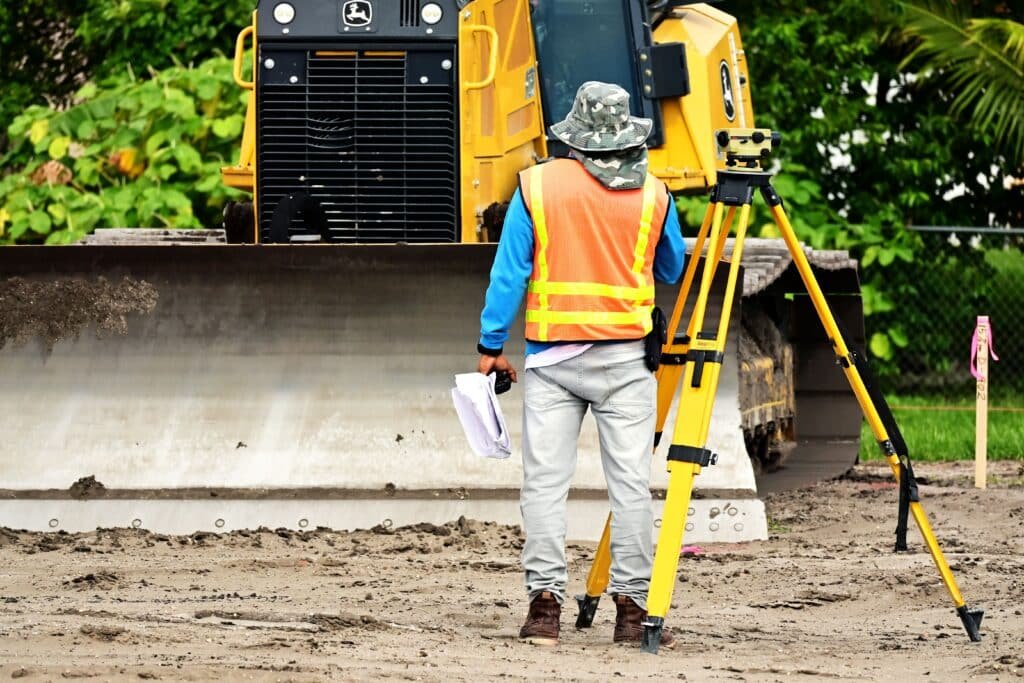
Saudi Arabia is building at a scale few countries match, from housing and commercial developments to giga-projects and new infrastructure. All of it rests on the ground beneath, and that ground varies a lot across the Kingdom. Soil testing in Saudi Arabia is the step that tells you what you are building on before you commit to a foundation, and it is the difference between a structure that stands quietly for decades and one that develops problems no one budgeted for.
In this article
Why soil testing matters in Saudi Arabia
Ground conditions across Saudi Arabia change from one region to the next, and sometimes across a single site. Coastal areas in the Eastern Province and around Jeddah can hold sabkha, a weak, salt-rich ground with aggressive groundwater. Inland sites can present expansive clays that swell and shrink, or collapsible soils that settle suddenly when they get wet. On top of that, the sheer scale and speed of construction raises the stakes, because the larger the structure, the less it forgives a wrong assumption about the ground. Testing is also a code matter, as geotechnical investigation underpins compliant foundation design under the Saudi Building Code.
What soil testing involves
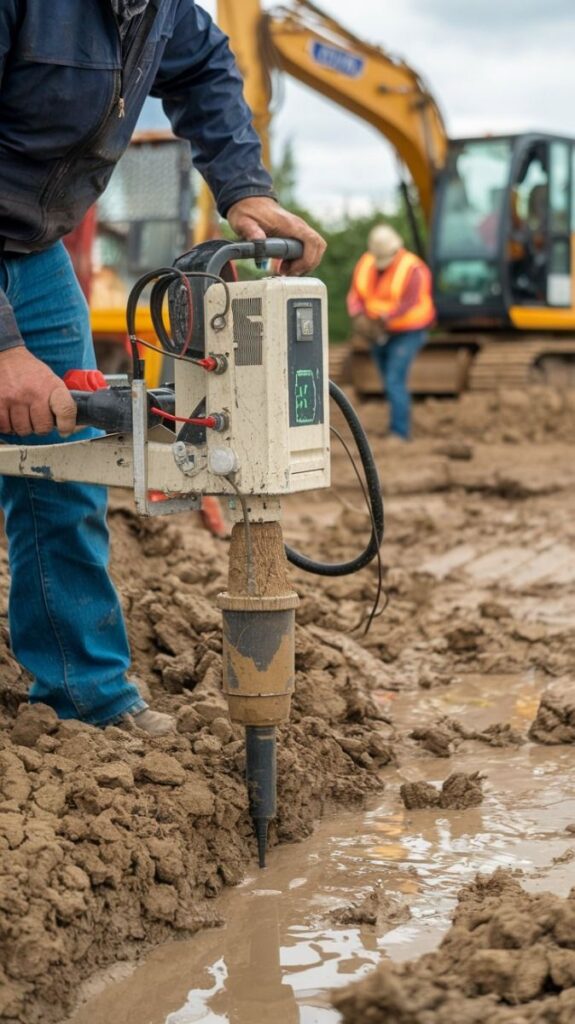
A proper investigation is more than one quick sample. It usually begins with boreholes drilled across the site to recover soil from different depths. In the field, a Standard Penetration Test measures how dense or firm each layer is. Samples then go to a laboratory for strength, moisture, particle size, and chemical analysis. That chemical step matters here, because the sulphate and chloride content of soil and groundwater decides which cement and protection the foundation needs. The number and depth of boreholes are set by the size of the structure and how variable the ground looks, not by a fixed template.
The ground rarely matches the assumption. Testing is how you replace the guess with a number.
What happens if you skip it
Skipping testing looks like a saving until the ground proves otherwise. Weak or unstable soil that goes unchecked tends to show up as foundation cracks, uneven settlement, and general structural weakness, and the repairs cost far more than the investigation would have. Add higher long-term maintenance and the delays that come with fixing a foundation problem mid-project, and the maths almost always favours testing first. The risks are real and, with a proper soil investigation in Saudi Arabia, largely avoidable.
Types of soil testing services
A capable geotechnical provider offers a range of investigation services, including:
- Soil borehole drilling and sampling.
- Laboratory analysis of strength, moisture, and chemistry.
- Ground condition and bearing capacity assessment.
- Site investigation reporting an engineer can design from.
Together these produce the data that safe construction planning depends on. At Compass Surveying and Geotechnical, the work is done with proper equipment and experienced engineers so the results are accurate and dependable. Our geotechnical services are scoped to the decisions the design team has to make.
Where it applies
Soil testing earns its place on almost every kind of project in the Kingdom:
- Residential construction
- Commercial developments
- Road and infrastructure projects
- Industrial facilities
- Large-scale land development
Whatever the scale, soil testing in Saudi Arabia is what gives a project a foundation it can trust. It is the first and most important step in any build, and getting it right early protects the entire budget and timeline that follow. With expert support from Compass Surveying and Geotechnical, clients get accurate soil evaluations and reliable results across the Kingdom.