


On a building site, the most significant issues can arise from what is hidden beneath the surface. Gas pipes, communication ducts, electricity cables, and water lines are frequently hidden throughout the UAE, Saudi Arabia, and Qatar. You can save time, money, and significant risk by locating these services beforehand with the aid of an underground utility study.
What is a survey of underground utilities?
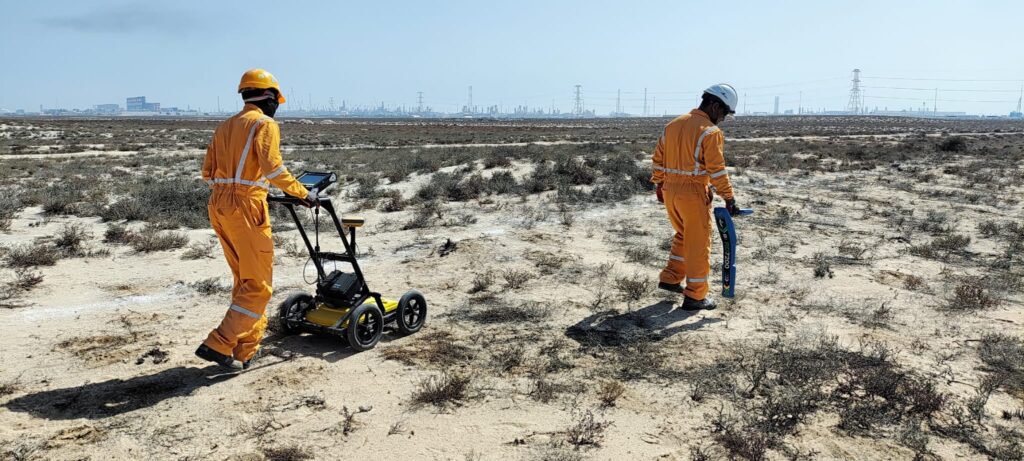
A safe, non-destructive method of locating and mapping subsurface utilities is an underground utility survey. Without excavating or causing damage to the site, surveyors can determine what lies beneath the surface by using contemporary techniques like utility locators and GPR scanning.
The Benefits of This Survey for Your Project
Understanding the precise location of subterranean utilities enables project teams to make safer and more effective plans. It is beneficial to:
Prevent unanticipated service damage
Cut down on expensive delays and rework
Increase worker and equipment safety
Encourage precise foundation and excavation planning.
Uses of Underground Utility Surveys
In the GCC, these surveys are frequently used for:
Construction of buildings and site preparation
Infrastructure and road projects
Upgrading and maintaining utilities
Redevelopment and remodeling projects
Prior to excavation, subsurface surveys are increasingly a common need in rapidly growing cities throughout the United Arab Emirates, Saudi Arabia, and Qatar.
Intelligent Technology, Explicit Outcomes
GPR technology, digital mapping, and professional analysis are all combined in contemporary underground utility surveys to produce dependable, unambiguous results. From day one, engineers, contractors, and planners can make decisions with confidence thanks to the ultimate outputs.
Concluding points
An underground utility survey is a wise first step, not just a precaution. You can safeguard your project, your personnel, and your investment by being aware of what’s underneath your site.